
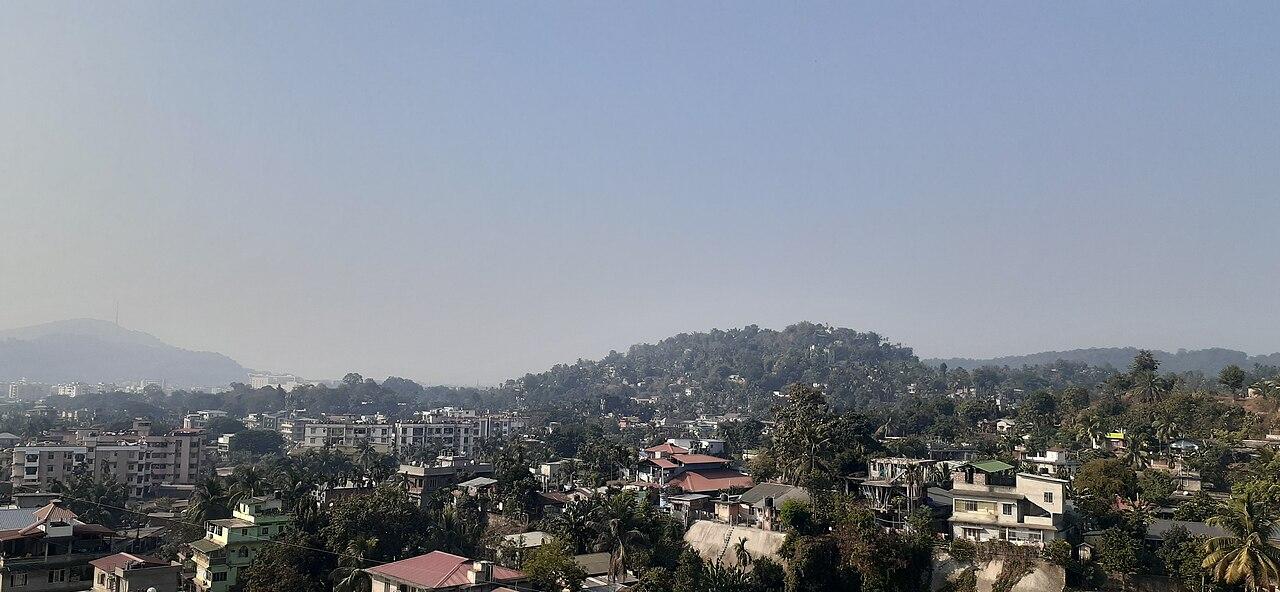
Guwahati is the commercial and cultural gateway to Northeast India — a city whose property market has moved from a sleepy regional centre to a genuine growth story, fuelled by infrastructure investment, rising professional incomes, and increasing connectivity. For property owners in Guwahati looking to sell in 2026, the good news is that buyer interest is growing. The challenge is that the city's property market has its own documentation conventions, legal landscape, and buyer behaviour that differ meaningfully from other Indian cities. This guide helps you sell without paying a broker upfront — and without being caught off-guard by the specifics of the Guwahati market.
Guwahati's Property Market: A Seller's Perspective in 2026
Guwahati straddles the south bank of the Brahmaputra and has expanded significantly over the past decade into peripheral areas that were once considered far from the city. Established localities like Ulubari, Ganeshguri, GS Road, Zoo Road, Bharalumukh, and Dispur continue to command strong demand from government employees, business families, and professionals. Newer areas — Beltola, Basistha, Kahilipara, Lokhra, and VIP Road — attract buyers looking for larger plots or newer constructions at slightly more accessible prices.
Infrastructure projects — the new bridges across the Brahmaputra, metro rail work, and airport expansion — are reshaping the city's geography of demand. Areas near these connectivity improvements have seen rising interest, particularly from buyers who anticipate that improved access will raise values over time. As a seller, knowing which demand drivers your property sits near helps you frame its appeal to the right buyer profile.
Guwahati's buyer pool includes government employees (the state capital effect creates strong demand here), professionals at IT and BPO firms, families upgrading from rented accommodation, and investors from within Assam and the broader Northeast. NRI demand is more limited than in Kerala or Punjab, but the diaspora from the Northeast settled in cities like Delhi, Bengaluru, and Mumbai does transact Guwahati property — usually for family homes or inheritance settlements.
Land Titles and Documentation in Guwahati: What Every Seller Needs
Land documentation in Assam has historically been more complex than in many other Indian states, partly because of the patta (land ownership document) system and the involvement of multiple revenue and land authorities. Getting this right before you list is not just advisable — it is essential, because buyers' lawyers and banks apply careful scrutiny to Guwahati land titles.
- Patta (land records): The primary proof of ownership in Assam is the Jamabandi or Patta issued under the Assam Land Revenue Regulation. Your name must appear as the recorded pattadar (owner) in the current Jamabandi at the Circle Office. This is separate from the registered sale deed — both are necessary.
- Registered sale deed: The original registered sale deed in your name, along with all predecessor deeds forming the chain of title. Assam follows the Indian Registration Act and Transfer of Property Act for sale deed registration.
- Mutation certificate: After every purchase, the new owner must apply for mutation (name change in revenue records) at the local Revenue Circle. If your name has not been mutated into the Jamabandi after your original purchase, this needs to be resolved before sale.
- Encumbrance certificate: Issued by the Sub-Registrar's office, this confirms no mortgages, charges, or registered agreements are outstanding against the property.
- Building plan sanction: From the Guwahati Metropolitan Development Authority (GMDA) or Guwahati Municipal Corporation (GMC), as applicable. Many older constructions in Guwahati predate proper plan approval — if your property falls in this category, consult a lawyer about regularisation options and disclose the situation to buyers.
- Completion certificate / occupancy certificate: Required by banks for home loan disbursement on a built property.
- Property tax receipts: From GMC, confirming current payment status.
- Land type confirmation: In Assam, certain categories of land (such as tribal belts and blocks, ceiling surplus land, or land under certain Acts) have restrictions on transfer. Confirm that your land category has no such transfer restriction before listing — a buyer's lawyer will check this.
Why Brokerage-Free Selling is Now Realistic in Guwahati
Paying a broker 1-2% of the sale value to find a buyer was once the only realistic option for most sellers in Guwahati — broker networks had the buyer contacts and sellers didn't. That equation has changed. Buyers now search online extensively before contacting anyone, and seller-facing platforms that connect owners directly to verified buyers have changed the economics of property selling.
The specific problem with the traditional broker model is this: you pay the commission regardless of what happens. The property might sell in three months or it might take eighteen — the broker earns the same fee either way, often collected partly upfront or on agreement. On a ₹45 lakh house, a 1.5% seller-side commission is ₹67,500. On a ₹80 lakh property it is ₹1.2 lakh. These are real costs that reduce your net proceeds from the sale.
BookPropertyVisit's pay-after-conversion model works differently: list your property for free and pay nothing until your property actually sells. Buyer enquiries are screened for genuine intent and financial seriousness before they are matched to your listing. Free accompanied site visits are arranged with a BookPropertyVisit representative present, so visits are coordinated and managed. You don't carry the financial risk of a listing that doesn't sell — the platform's incentive is entirely aligned with yours.
For Guwahati sellers specifically, see how selling property in Guwahati works through the platform. And for the full process end to end, read about how selling works on BookPropertyVisit before you decide.
Capital Gains and Tax Planning for Guwahati Sellers
A property sale generates capital gains tax liability that depends on how long you have held the property and what you paid for it originally. Planning this before you agree on a price — rather than after — gives you a clearer picture of your net proceeds.
Short-term vs long-term: Properties held for more than 24 months produce long-term capital gains (LTCG). Properties held less than 24 months produce short-term capital gains taxed at your income tax slab rate.
Current LTCG tax rate: Following the Union Budget 2024 changes, LTCG on immovable property is taxed at 12.5% without indexation. For properties acquired before a certain date, the previous regime with indexation benefit may be available — a CA can calculate which option lowers your tax liability for your specific acquisition. Given that property values in Guwahati have risen significantly over the past decade in many areas, the indexation question is worth examining carefully.
TDS: On any sale at ₹50 lakh or more, the buyer is required to deduct TDS at 1% under Section 194-IA before paying you (deposited via Form 26QB). You receive Form 16B and claim this in your ITR. Remind your buyer of this obligation — some buyers in smaller cities are not aware of it.
Reinvestment options: Section 54 allows you to defer or avoid LTCG tax by reinvesting the capital gains in another residential property within the prescribed time. Section 54EC allows you to invest up to ₹50 lakh in capital-gains bonds (NHAI, REC) within six months of the sale to get tax relief on that amount. Confirm current limits and timelines with a tax professional — these provisions have seen changes and the details matter.
Assam stamp duty: Stamp duty and registration charges are borne by the buyer in Assam and are calculated on the higher of the sale value and the government circle rate. Buyers are aware of this cost and may factor it into their offer — understanding it helps you negotiate with clarity.
Handling Site Visits and Closing the Deal
Guwahati buyers tend to be methodical and community-informed. A first visit is often an initial look; serious buyers return with family members or a trusted adviser. Managing this process well improves your chances of closing:
- Be consistent and available: A seller who is hard to reach or repeatedly reschedules visits loses buyer confidence quickly. Fix two or three regular time slots for visits and honour them.
- Disclose known issues: Waterlogging near the property (a concern in parts of Guwahati), any pending legal matters, structural repairs needed, or an unapproved extension should be disclosed early. Buyers who discover these during due diligence — rather than from you — lose trust and either back out or demand steep discounts.
- Verify your buyer's financing: Before signing any agreement and accepting a large advance, confirm whether the buyer is funding from own savings or a home loan. A loan-dependent buyer who later does not qualify for the required amount can hold up the transaction for months. A loan pre-approval letter (in-principle sanction) from a bank is a reasonable thing to ask for before you take the property off the market.
- Use a registered sale agreement: The agreement of sale between you and the buyer should be registered at the Sub-Registrar's office (or at minimum, properly stamped). An unregistered agreement has limited enforceability. A property lawyer in Guwahati familiar with Assam land law is the right person to draft this.
Are there restrictions on who can buy land in Assam?
Yes, and this is an important consideration for Guwahati sellers. Under the Assam Land and Revenue Regulation Act and subsequent notifications, certain categories of land — particularly in notified tribal belts and blocks — can only be transferred within specified tribal communities. If your land falls in a notified area, these restrictions apply and you must consult a lawyer before listing. For most urban Guwahati land (within GMC limits or in GMDA-notified areas), these tribal belt restrictions generally do not apply, but confirmation from a local land lawyer before listing is always the safe approach. Buyers' banks will conduct this check during due diligence in any case.
How do I handle a property that came to me through inheritance in Assam?
If the property came to you by inheritance, you need to establish your title formally before selling. The typical documents required are a legal heir certificate (from the Circle Officer or a court, depending on circumstances) and a mutation in your name in the Jamabandi. If there is a registered Will, it must be probated if required. If multiple heirs are involved, all must consent to the sale, and ideally a partition deed should be registered to consolidate your specific share before the sale. Start this process early — it can take 2-4 months even in straightforward cases, and some buyers will not make an advance payment until heir titles are clear.
What is the typical timeline from listing to registration in Guwahati?
For a well-documented property priced correctly in a demand area, the typical journey is: listing to first enquiries within 1-2 weeks; shortlisting and site visits over 2-4 weeks; agreement and advance in week 4-6; buyer due diligence, loan processing (if applicable), and documentation review over 4-8 weeks; registration and possession in week 8-16. Total elapsed time from listing to registration is often 2-4 months for a smooth transaction. Properties with documentation gaps or pricing issues can take considerably longer. Using a platform that actively matches you to verified buyers compresses the early stages.
Do I need to be in Guwahati to complete the sale?
You must either be present in person at the Sub-Registrar's office for registration, or you must execute a registered Power of Attorney (POA) in favour of someone who can appear on your behalf. The POA must be for the specific purpose of selling this property and must itself be registered. If you are outside India at the time of giving the POA, it must be executed before the Indian consulate and sent to Assam for adjudication. Plan this well in advance, particularly if you are selling inherited property while living in another city or abroad — the paperwork for a POA takes time on both ends.
Guwahati is a market on the move, and sellers who approach it with the right preparation capture that momentum to close at good prices and without delays. List your property for free on BookPropertyVisit — reach verified, serious buyers, have site visits managed professionally, and pay absolutely nothing until your property sells. No brokerage upfront. No commissions until the deal closes. Get in touch at info@mexilet.com or +91 7025892205 — we are happy to answer your questions before you list.
Thinking of selling your property?
Free listing · 0% brokerage · pay only when it sells