
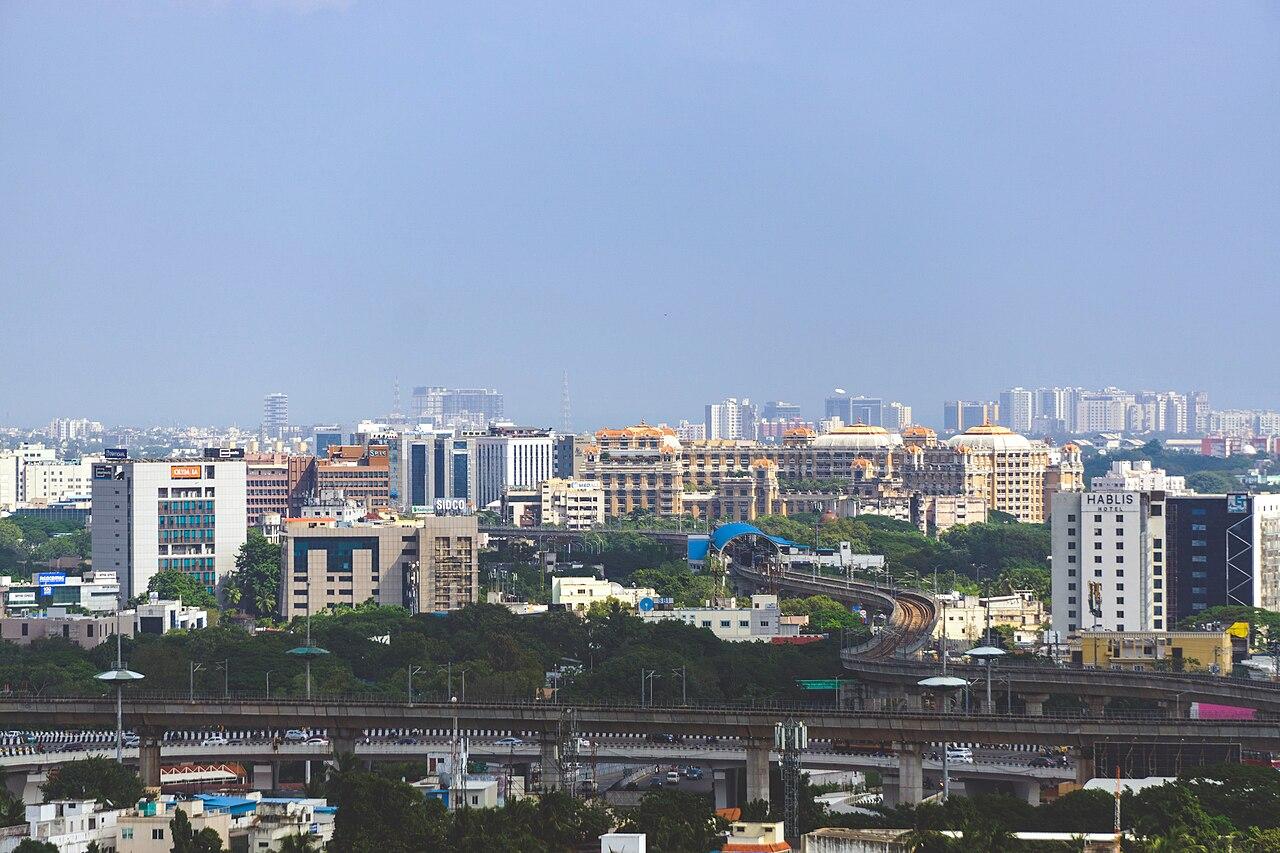
Chennai is one of India's most stable property markets — but that stability can work against sellers who price incorrectly or market passively. If you own a flat, house, or plot in Chennai and want to sell it quickly without paying broker commission until the deal closes, this guide is for you. We cover what actually drives buyer decisions in Chennai's different neighbourhoods, what documentation you must prepare, and how the pay-after-it-sells model changes the economics of selling.
Chennai's Property Landscape in 2026: What Sellers Need to Know
Chennai's residential market is spread across distinct corridors with different buyer profiles. The Old Mahabalipuram Road (OMR) corridor continues to serve IT professionals working in Sholinganallur, Perungudi, and Siruseri. The Western Corridor — encompassing Porur, Vadapalani, and Ambattur — draws manufacturing sector employees and middle-income families. Anna Nagar, Adyar, Besant Nagar, and Nungambakkam remain the city's premium residential addresses, where supply is limited and demand from established families and returning NRIs keeps values firm.
North Chennai, including Tondiarpet and Kolathur, offers significantly more affordable price points and appeals to first-time buyers and investors. If you own property in any of these corridors, understanding who your buyer is — their budget, their loan eligibility, and what they care about most — helps you position and present your property appropriately.
Why Properties in Chennai Sit Unsold (And How to Avoid It)
In a market as large as Chennai, properties that fail to sell within a reasonable timeframe almost always have one of three problems: overpricing, documentation gaps, or poor presentation to the wrong audience. Here is how to address each:
- Overpricing: Chennai buyers are relatively well-informed and compare actively. An asking price that is noticeably above the guidance value (which sets the floor for stamp duty) and above comparable registered transactions signals either an uninformed seller or a negotiation game that serious buyers do not want to play. Check recent Sale Deed registrations through the Tamil Nadu Registration Department portal for your street and locality before setting your price.
- Documentation gaps: An incomplete Patta, an unapproved plan, or outstanding property tax dues will surface during a buyer's bank due diligence and stall or kill the transaction. Prepare your complete document set before you list — it signals credibility and prevents last-minute delays.
- Wrong audience: A 3BHK apartment in Sholinganallur listed only in offline classifieds will be missed by the IT professional who is the ideal buyer. Digital-first listing, with accurate details and good photographs, dramatically expands your reach to the right audience.
Essential Documents for Selling a Home in Chennai
Tamil Nadu has specific document requirements, and Chennai's Sub-Registrar offices process a high volume of transactions — having a complete file ready avoids delays:
- Parent document and sale deed: The original purchase deed or parent document establishing your title, plus any prior sale deeds forming the chain of title.
- Encumbrance Certificate (EC): Obtain an EC from the Sub-Registrar's office for at least 13 years. This confirms no mortgage or encumbrance is registered against the property.
- Patta (for land and individual houses): The Patta is the land revenue record in the owner's name. It is issued by the Revenue Department and is essential for independent houses and plots. For apartments, the undivided share (UDS) in the land is reflected in the sale deed rather than a separate Patta.
- Approved building plan: Sanctioned by CMDA (Chennai Metropolitan Development Authority) or the respective local body. Deviations from the approved plan should be disclosed.
- Property tax receipts: Proof of current payment from the Greater Chennai Corporation (GCC) or relevant municipality.
- Society NOC and share certificate: For apartments, a no-dues certificate from the Residents' Association and, where applicable, a share certificate from the cooperative society.
Selling Faster: The Pay-After-Conversion Approach
The conventional selling process in Chennai involves engaging one or more brokers, each of whom charges 1% to 2% of the sale value as commission — payable whether or not their specific introduction led to the final buyer. For a flat selling at ₹80 lakh, that can mean paying ₹80,000 to ₹1.6 lakh in commission, sometimes to multiple brokers who each claim a share.
The alternative is listing on a platform where you pay only after your property sells. On BookPropertyVisit, listing is completely free and there is no commission until the property changes hands. The platform brings in verified buyers — people who have confirmed intent and financial readiness — and arranges accompanied site visits so you do not spend time with casual enquirers. This is particularly valuable for Chennai owners who are time-constrained: working professionals, NRIs, or joint-family property owners who want a structured process without the unpredictability of ad-hoc broker management.
List your property for free and see how the process works, or visit the page on selling property in Chennai for city-specific details. The full platform model is explained at how selling works on BookPropertyVisit.
Capital Gains Tax When Selling Property in Chennai
Property sale triggers income tax on the capital gain — the difference between your net sale consideration and your indexed cost of acquisition. The key rules for Chennai sellers in 2026 are as follows (verify current provisions with a Chartered Accountant, as indexation and rate rules have seen recent changes):
- Long-term capital gains (LTCG): Property held for more than 24 months qualifies. The LTCG was historically taxed at 20% with indexation; check the current applicable rate and indexation rules with a CA before filing.
- Short-term capital gains (STCG): If the property was held for 24 months or less, gains are added to your total income and taxed at your income slab rate.
- TDS under Section 194-IA: For any property sale above ₹50 lakh, the buyer must deduct TDS at 1% before paying the balance. Ensure your PAN is provided and the buyer files Form 26QB promptly so the credit reflects in your Form 26AS.
- Reinvestment exemptions: Section 54 allows LTCG to be sheltered by purchasing another residential property within specified timelines. Section 54EC allows investment in notified capital-gains bonds (subject to caps and lock-in) to defer tax. Engage a CA before the transaction to plan your reinvestment timeline.
- NRI sellers: TDS is deducted at the applicable LTCG rate (broadly 12.5% to 20% plus surcharge and cess, depending on the holding period and applicable rules). If you expect the actual tax to be lower, apply for a lower-deduction certificate (Form 13) well before the registration date — the process takes time.
From Agreement to Registration: The Final Steps in Chennai
When a buyer is ready to proceed, the sale is formalised through an Agreement to Sale, which should be drafted with the help of a local advocate. The agreement specifies the sale price, advance paid, balance payment schedule, registration date, and responsibilities for document delivery. An advance of 10% to 20% of the agreed price is typical.
Registration occurs at the relevant Sub-Registrar's office in Chennai. Both parties (or their PoA holders) must be present. Tamil Nadu stamp duty is calculated on the higher of the guidance value or the actual sale consideration — confirm the applicable rates with an advocate before proceeding, as these are set by the state government and can be revised. After registration, update the Patta in the buyer's name at the local Revenue Department office, and hand over the original documents as agreed.
What is the guidance value and how does it affect my sale in Chennai?
The guidance value (also called the ready reckoner rate or circle rate) is the minimum value at which a property can be registered in Tamil Nadu, as set by the state government's Registration Department. Stamp duty and registration charges are calculated on whichever is higher — the guidance value or the actual agreed sale price. If your agreed price is below the guidance value, the transaction must still be registered at the guidance value for tax purposes. Buyers taking home loans will have the property valued by the bank independently, which may differ from both the guidance value and your asking price.
Can I sell my Chennai property if it is under a home loan?
Yes. A property under an existing home loan can be sold, but the outstanding loan must be cleared before or at the time of registration. In most cases, the buyer's bank pays off your loan directly to your lender as part of the transaction structure, with the balance paid to you. Obtain a foreclosure statement from your bank before negotiations to know the exact payoff amount. Your bank will issue a loan closure letter and return the original documents once the loan is cleared — these documents go to the buyer's bank if they are taking a loan, or to the buyer directly if they are paying cash.
Is a Power of Attorney valid for property registration in Tamil Nadu?
Yes, a registered Power of Attorney can be used for property registration in Tamil Nadu, but the PoA itself must be registered at the Sub-Registrar's office (not merely notarised) to be accepted for property transactions. An unregistered PoA is not sufficient for registration purposes. For NRIs, the PoA must also be attested by the Indian Embassy or Consulate. Engage a local advocate to ensure the PoA is correctly drafted and registered.
How do I handle multiple co-owners when selling a Chennai property?
If a property has joint owners — as is common with inherited family property — all co-owners must either appear at registration or provide registered PoA to a representative. If any co-owner is a minor, the transaction requires court approval. Disputes among co-owners can delay sales significantly; it is worth resolving any disagreement about the sale price or distribution of proceeds before approaching buyers, as protracted negotiations after a buyer is found often result in the buyer walking away.
Ready to sell your Chennai home without paying commission upfront? List your property for free on BookPropertyVisit, pay nothing until it sells, and let the platform bring verified buyers and manage site visits for you. Contact us at info@mexilet.com or +91 7025892205 if you have questions about getting started.
Thinking of selling your property?
Free listing · 0% brokerage · pay only when it sells