
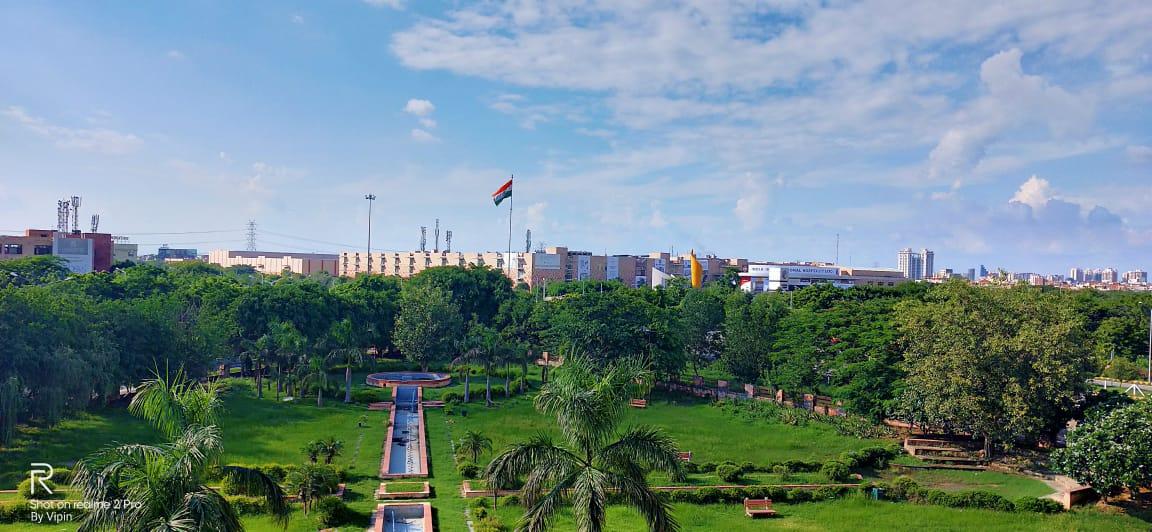
Greater Noida has grown from a planned township into one of the NCR's most active real estate markets, attracting end-users, investors and NRIs alike. If you own a flat, plot or villa here and are thinking of selling in 2026, you can do it without handing over a hefty brokerage to a middleman — and this guide shows you exactly how.
Understanding the Greater Noida Property Market in 2026
Greater Noida is administered by the Greater Noida Industrial Development Authority (GNIDA) and covers sectors spread across Yamuna Expressway, Knowledge Park, Techzone, and Omega/Zeta sectors. Connectivity improvements — including the Aqua Line metro extension talks and the operational Yamuna Expressway — continue to attract buyers from Delhi, Noida and even Gurgaon.
Demand in 2026 is led by mid-segment apartments (2 BHK and 3 BHK) and plotted developments. Builder floors in sectors like Omega I, II and III also see steady interest. As a seller, understanding which micro-market your property sits in determines both your pricing strategy and the type of buyer you are likely to attract.
Setting the Right Price Without Over-Relying on Brokers
One of the most common mistakes Greater Noida sellers make is accepting a broker's valuation at face value. Brokers sometimes under-price to achieve a quick sale that earns them their commission — or over-price to lock you in for months. Here is how to arrive at an honest price on your own:
- Check recent circle rates: GNIDA publishes circle rates (government guidance values) that are updated periodically. Your stamp duty will be calculated on the higher of circle rate or transaction value. In 2026, circle rates in Greater Noida vary by sector — get the latest from the GNIDA office or a registered sub-registrar.
- Study actual sale registrations: The UP Registration Department's public portal shows registered transactions near your property. These are real prices, not asking prices.
- Account for floor and facing premium: Higher floors with Yamuna Expressway views or east-facing units typically attract a modest premium in this market.
- Factor in pending dues: If your society has maintenance arrears or if there are outstanding lease dues to GNIDA, a buyer will discount the price accordingly. Clear these before listing.
Documents You Must Have Ready Before Listing
Greater Noida is an Authority-allotted land model, which makes title documentation slightly different from free-hold cities. Gather these before you accept a single viewing:
- Allotment Letter and Lease Deed: If your property is on Authority land (leasehold from GNIDA), you need the original allotment letter and registered lease deed. Buyers and their lawyers will ask for this first.
- No Dues Certificate from GNIDA: Confirms that all lease premium instalments are paid and no dues are outstanding with the Authority.
- Occupancy Certificate (OC): Many older projects in Greater Noida never received a full OC. Banks are reluctant to finance flats without one, which limits your buyer pool. If your OC is missing, get clarity from the builder or GNIDA before pricing.
- Society NOC: A no-objection from the Residents' Welfare Association or society management for the transfer of membership.
- Encumbrance Certificate: Confirms no loan or charge is registered against the property.
- PAN Card and Aadhaar: Required for the sale agreement and registration.
Tax Implications When Selling Property in Greater Noida
Understanding your tax position before you negotiate is smart — surprises at closing can unravel deals.
TDS (Tax Deducted at Source): Under Section 194-IA of the Income Tax Act, the buyer is required to deduct TDS at 1% of the sale consideration if the property value is ₹50 lakh or more. As the seller, you will receive the net amount and can claim the TDS against your income tax liability when filing. If you are an NRI, TDS is deducted at significantly higher rates — generally around 12.5% to 20% (plus applicable surcharge and cess) depending on whether the gain is long-term or short-term. NRI sellers should consider applying for a lower-deduction certificate (Form 13) from the Income Tax Department well in advance of closing to avoid cash-flow difficulties.
Capital Gains: If you have held the property for more than 24 months, the profit is treated as Long-Term Capital Gain (LTCG). The indexation rules for property were revised in the Union Budget 2024 — as of 2026, the applicable LTCG rate and whether indexation benefit is available depends on when you purchased. Confirm the current position with a chartered accountant before you finalise pricing. Exemptions under Section 54 (if you reinvest in another residential property), Section 54EC (if you invest in specified capital gains bonds within six months), and Section 54F may help you reduce or defer tax.
How to Find Genuine Buyers Without a Broker in Greater Noida
The traditional route of placing a broker in the middle costs sellers anywhere between 1% and 2% of the property value — on a ₹60 lakh flat, that is ₹60,000 to ₹1.2 lakh gone before you even begin. There is a better approach.
List your property for free on BookPropertyVisit and pay nothing until your property actually sells. The platform screens buyers, arranges accompanied site visits, and does not charge you a single rupee in commission or brokerage until a sale is concluded. You deal only with verified, serious buyers — not time-wasters or fellow brokers who are just "exploring for a client."
To understand the full process, read more about how selling works on BookPropertyVisit before you decide. There is no lock-in and no upfront payment.
Negotiating and Closing the Sale
Once you have a serious buyer, the sale process in Greater Noida follows these broad steps:
- Token or Booking Amount: A small amount (typically ₹25,000 to ₹1 lakh) is paid to take the property off the market. Get a simple written receipt.
- Agreement to Sell: A detailed agreement covering price, possession date, penalty clauses and conditions for GNIDA transfer. Have a lawyer draft or review this.
- GNIDA Transfer Process: If the property is on leasehold land, both parties must apply to GNIDA for a transfer of lease. There is a transfer fee payable to the Authority. This step takes time — plan for it.
- Sale Deed Registration: Execute and register the sale deed at the sub-registrar office. Stamp duty in Uttar Pradesh varies based on buyer gender and property value — confirm current rates, as the state government revises them.
- Possession and Handover: Once registration is complete, hand over keys, complete meter transfer formalities with your electricity provider (PVVNL or similar), and settle final maintenance dues with the society.
Do I need a broker to sell property in Greater Noida?
No, you do not. You can list your property directly on platforms like BookPropertyVisit at zero cost and pay a fee only when the sale completes. This approach saves you the brokerage that would otherwise come out of your proceeds, and you retain full control over negotiations and the selling timeline.
What is the GNIDA transfer fee and who pays it?
For leasehold plots and flats allotted by the Greater Noida Industrial Development Authority, a transfer fee is applicable when ownership changes hands. The amount depends on the plot size and sector, and it is updated by GNIDA from time to time. Typically the buyer and seller negotiate who bears this cost — it is often split or borne by the buyer. Check the current schedule on GNIDA's official portal or at their office before negotiations.
My flat does not have an Occupancy Certificate — can I still sell it?
Yes, you can sell a flat without an OC, but it materially affects your buyer pool because most banks will not finance such a purchase. You will likely be dealing with cash buyers, which may mean a lower price or a longer selling timeline. It is worth checking with the builder or GNIDA on whether an OC can be obtained — sometimes it requires the builder to clear pending dues with the Authority, which may be possible to facilitate before you list.
How long does property registration take in Greater Noida?
Once both parties have the required documents, the actual registration at the sub-registrar office in Greater Noida is typically completed in a day. However, the overall closing timeline — from agreement to sale deed — depends on the buyer's home loan processing time (usually 3-6 weeks), GNIDA transfer approval (if applicable), and due diligence. A realistic timeline for a clean transaction is 6-10 weeks from the agreement stage.
Selling your property in Greater Noida in 2026 does not have to mean handing over thousands of rupees to a broker. List your property for free on BookPropertyVisit today and pay only after your property sells — not before, not during, not unless. The platform brings you screened buyers and arranges free site visits so you spend your time only on conversations that matter. For queries, reach the team at info@mexilet.com or call +91 7025892205.
Thinking of selling your property?
Free listing · 0% brokerage · pay only when it sells