
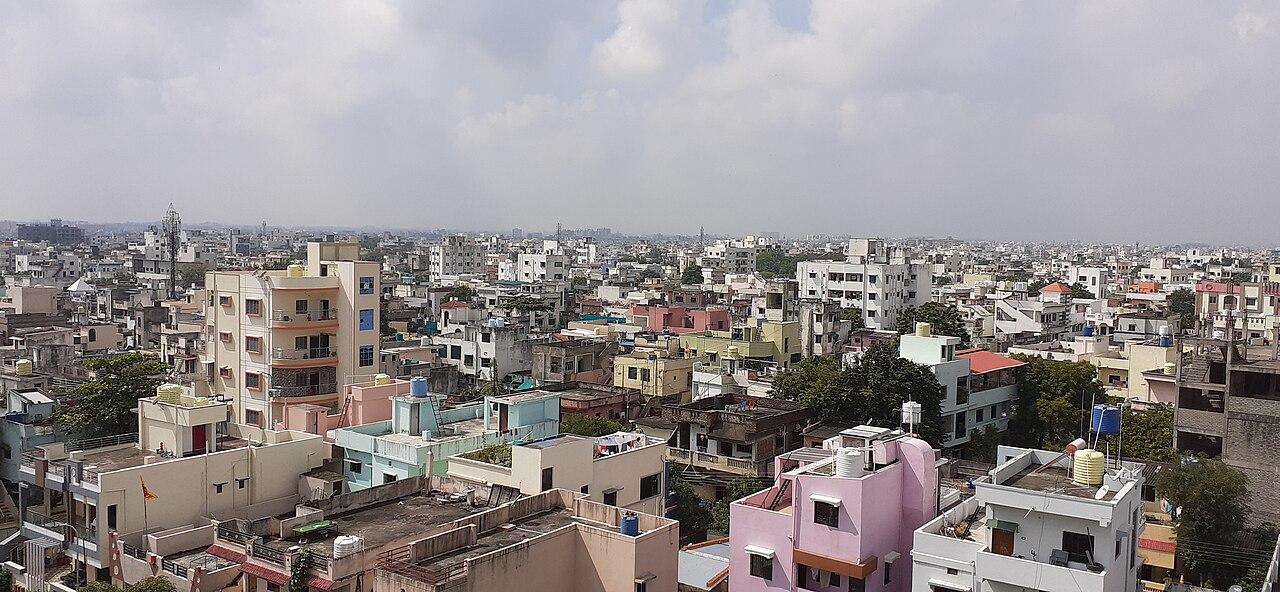
Selling a property in Nagpur in 2026 without a broker is not only possible — for many owners it is the smarter choice. With the right preparation and a platform that connects you directly to verified buyers, you can avoid paying commission on the sale price, keep control of the process, and still close at a fair price. This guide walks you through every stage, from getting your paperwork in order to handing over possession.
Why More Nagpur Owners Are Skipping Brokers
Traditional brokerage in Nagpur typically costs between 1% and 2% of the transaction value. On a flat priced at ₹60 lakh, that is ₹60,000 to ₹1,20,000 paid to someone who may show your property to dozens of unqualified visitors before finding a serious buyer — or may not find one at all. In many cases, the same broker is also representing the buyer, which creates an obvious conflict of interest.
The alternative is a pay-after-conversion model. Platforms like BookPropertyVisit let you list your property for free and charge nothing until the deal is complete. You only pay if and when your property actually sells. This removes the financial risk of listing and gives you genuine motivation alignment — the platform earns only when you do.
Nagpur's real estate market has matured considerably, with solid demand around Wardha Road, Hingna, Manish Nagar, Besa, and newer corridors like Mihan. Buyers today are research-driven and come prepared. As a seller, meeting that buyer directly — with a structured process in place — is realistic.
Getting Your Property Documents Ready
The first step before any listing or negotiation is ensuring your documents are complete and correct. Buyers in Nagpur, especially those using bank finance, will ask for all of these upfront.
- Sale deed / title deed: The registered document showing you as the legal owner. Check that the name matches your current identity proof exactly.
- 7/12 extract or property card: For plots and agricultural conversions in Nagpur, the 7/12 (satbara) extract from the revenue department is essential. City properties may instead use the property card issued by NMC (Nagpur Municipal Corporation).
- Encumbrance certificate: Obtain this from the sub-registrar's office to confirm there are no outstanding loans or legal claims on the property.
- Approved building plan: For constructed properties, the sanctioned plan from NMC or the relevant authority shows the structure is legal.
- Occupancy certificate (OC): If you are selling a flat in an apartment complex, the OC confirms the building was inspected and approved for habitation.
- Society NOC: If the property is within a housing society, you will need a no-objection certificate from the society before transfer.
- Latest tax receipts: Property tax receipts from NMC showing no dues.
Having all of these organised in one folder — physical and digital copies — signals to buyers that you are a serious seller and shortens the due diligence period significantly.
Pricing Your Property Correctly in Nagpur
Overpricing is the single biggest reason properties sit unsold for months. In Nagpur, circle rates (government ready reckoner rates) vary by zone and locality and are updated periodically by the Maharashtra government. The actual market rate in most areas trades at a premium above the circle rate, but by how much depends entirely on the location, floor, age of the building, and amenities.
A practical way to calibrate your price is to look at recent registered transactions in your area. These are public records available through the Maharashtra IGR (Inspector General of Registration) website. Look at what similar-sized properties in your locality transacted for in the last six to twelve months, not asking prices on portals. Asking prices are aspirational; registration data is real.
If your flat is on a higher floor with good natural light, recently renovated, and in a well-managed society, you can reasonably price above the locality average. If the building is older, the road is narrow, or there are pending maintenance issues, price accordingly. Buyers will negotiate, so build in some room — but not so much that you deter serious inquiries.
Tax Obligations When Selling Property in Nagpur
Capital gains tax is often the most surprising element for first-time sellers. Here is what you need to know for 2026 — and where you should confirm details with a chartered accountant because rules can change.
Short-term vs long-term gains: If you have held the property for more than two years, any profit is treated as long-term capital gains (LTCG). Below two years, it is short-term and taxed at your applicable income tax slab rate.
LTCG tax rate: The Finance Act 2024 revised the long-term capital gains tax rate on immovable property to 12.5% without indexation. However, a grandfathering provision was introduced for properties held before a specific date allowing sellers to choose between the old indexed rate (20%) and the new flat rate (12.5%). This is a nuanced calculation and the better option depends on your purchase price and the date of acquisition — please verify the current position with a CA before computing your liability.
TDS deducted by the buyer: Under Section 194-IA of the Income Tax Act, when the sale value is ₹50 lakh or more, the buyer is required to deduct TDS at 1% of the consideration and deposit it using Form 26QB. This is not an additional cost to you — it comes out of the sale amount — but you should factor it into your net realisation calculation. For NRI sellers, TDS rates are significantly higher (approximately 12.5% to 20% plus surcharge and cess) and obtaining a lower-deduction certificate under Form 13 in advance is strongly advisable.
Exemptions: Section 54 of the Income Tax Act allows you to claim exemption on LTCG by reinvesting the gains in a residential property. Section 54EC allows investment in specified capital gains bonds (issued by REC, NHAI, etc.) within six months of sale. Both have conditions and caps — consult a CA to see which applies to your situation.
Conducting Site Visits Without Wasting Weekends
One of the most overlooked costs of selling without a broker is time — specifically, the time spent showing your property to people who were never serious buyers. Every unproductive visit takes you away from work, family, or rest.
The solution is pre-screening. Before any visit, a serious platform will have already verified the buyer's intent, budget, and requirements. When you list on BookPropertyVisit and explore selling property in Nagpur through the platform, site visits are coordinated with pre-verified buyers, and a representative accompanies the visit so you do not have to manage strangers alone. Learn how selling works on BookPropertyVisit to understand how the end-to-end process is structured.
If you are managing visits on your own, a few practical rules help: schedule visits during daylight hours, keep your property clean and well-lit, remove personal clutter so buyers can visualise the space, and note down every visitor's name and contact details. Follow up within 24 hours — many deals are won or lost at the follow-up stage.
Negotiation and Closing the Deal
Once a buyer expresses serious interest, the next steps move in a fairly standard sequence in Maharashtra. A token advance (sometimes called earnest money) is collected with a receipt — this signals mutual commitment. A sale agreement is then drafted, signed, and notarised, outlining the price, payment schedule, and possession date. Finally, the sale deed is registered at the sub-registrar's office in Nagpur, stamp duty is paid (rates vary in Maharashtra and are updated periodically — check the current rate before computing costs), and the transaction is complete.
Keep a lawyer involved for drafting the sale agreement and sale deed, even if you feel the deal is straightforward. Property transactions in India can go wrong in subtle ways — unclear possession clauses, undisclosed disputes — and a small legal fee at this stage prevents much larger problems later.
Do I need to hire a lawyer to sell my property in Nagpur without a broker?
You are not legally required to engage a lawyer, but it is strongly advisable. A lawyer or document writer (who may charge less than an advocate for straightforward transactions) should prepare the sale agreement and the registered sale deed. These documents define your rights and obligations precisely, and errors or ambiguities can lead to disputes after the money changes hands. Legal fees for a residential property transaction in Nagpur are generally modest relative to the transaction value.
What is stamp duty on property sale in Nagpur in 2026?
Stamp duty on property transactions in Maharashtra is levied as a percentage of the market value or the consideration, whichever is higher. Rates have been updated periodically by the Maharashtra government and may differ slightly for women buyers or properties in certain zones. As of recent guidelines, stamp duty in Maharashtra for residential property is around 5% to 6% with additional local body charges, but you should verify the exact current rate with the Maharashtra IGR website or your lawyer before finalising the deal, as this is the buyer's cost but affects your negotiation.
Can I sell my property in Nagpur if I live in another city or abroad?
Yes. You can execute a registered Power of Attorney (POA) in favour of a trusted person in Nagpur who can sign documents and register the sale deed on your behalf. If you are abroad, the POA must be executed before an Indian consulate or notarised and apostilled in the country of residence. Ensure the POA is registered in Nagpur after you return or when the attorney presents it. It is advisable to have a lawyer in Nagpur guide the POA language so it covers all the necessary powers without being overly broad.
What if my property has an outstanding home loan?
You can sell a property with an outstanding loan, but the process involves your lender. The buyer's payment (or a portion of it) is used to foreclose the loan, following which the lender issues a No Objection Certificate (NOC) and releases the original title documents. The logistics of this are handled through a tripartite agreement between you (seller), the buyer, and both banks if the buyer is also taking a loan. Coordinate early with your bank so the NOC timeline does not delay the registration.
Selling your property in Nagpur on your own terms is straightforward when you have clean documents, a realistic price, and a process that connects you to genuine buyers. List your property for free on BookPropertyVisit today — there is no upfront fee, no brokerage until your property sells, and every site visit is arranged with verified, serious buyers. Reach out at info@mexilet.com or call +91 7025892205 to learn more.
Thinking of selling your property?
Free listing · 0% brokerage · pay only when it sells