
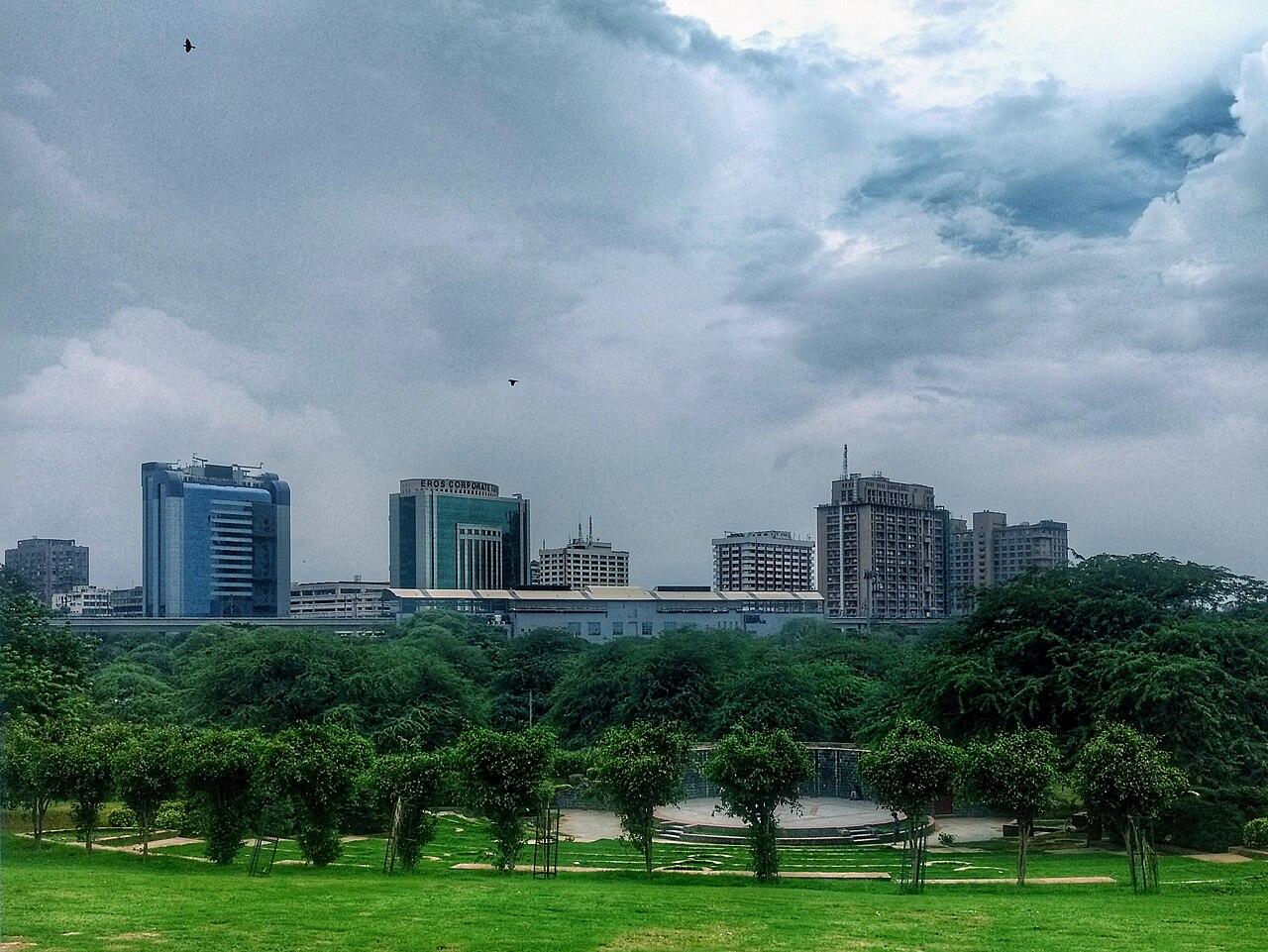
Delhi's property market in 2026 is active, layered, and deeply local — what works in South Delhi will not necessarily work in Dwarka or Rohini, and the legal landscape differs in important ways from other Indian metros. If you are an owner or builder looking to sell, this guide covers the full picture: documentation specific to Delhi, pricing strategy, tax obligations, and how to reach genuine buyers without paying brokerage upfront.
Understanding Delhi's Property Landscape as a Seller
Delhi is unique among Indian cities because property ownership and governance overlap between the Delhi Development Authority (DDA), the Municipal Corporation of Delhi (MCD), and in some areas the New Delhi Municipal Council (NDMC) and Delhi Cantonment Board. The type of property you own — DDA flat, freehold plot, builder floor, or leasehold land — determines the documents you need and the process you follow.
DDA flats: These are leasehold properties where the DDA retains ownership of the land. To sell, you need a conveyance deed or possession letter from DDA, the allotment letter, and in many cases, an NOC from DDA if the flat has not been converted to freehold. DDA has periodically offered freehold conversion schemes — if you have not converted, it is worth checking whether the scheme is currently open, as freehold status makes your flat more attractive to buyers, especially those needing bank finance.
Builder floors and independent houses: More common in South Delhi, West Delhi, and outer areas. Ownership is typically freehold, and the document trail runs through registered sale deeds at the local sub-registrar office. Ensure the house has a valid sanctioned plan from MCD or the relevant body, and that any additional floors constructed later are covered under compounding or regularisation orders if applicable.
Plotted properties: If you are selling a plot, confirm the land use category — residential, mixed-use, or commercial — through the Delhi Master Plan (MPD 2041 is the current framework). Selling a plot with unclear land use can stall the deal if the buyer plans to construct and needs building plan approval.
Documents You Need Before Listing in Delhi
Organise the following before you speak to any buyer or platform:
- Registered sale deed / conveyance deed / possession letter: The foundational ownership document.
- Chain of title documents: If the property has changed hands before, the complete chain of previous sale deeds establishes clear title.
- Encumbrance certificate: Confirm no pending mortgage or legal claim. For Delhi properties this is obtained from the sub-registrar's office.
- Property tax clearance: Receipt from MCD (or NDMC/DCB as applicable) confirming no dues on the property.
- Sanction plan and completion certificate: For built structures, the approved plan and, where available, a completion certificate from MCD.
- Society NOC: For apartments in registered societies, a no-objection letter from the RWA or managing committee.
- Power and water dues clearance: BSES/Tata Power and Delhi Jal Board receipts showing no outstanding bills.
Delhi buyers using home loans will need their bank's lawyer to verify all of the above. Having clean documents reduces the time from agreement to registration and keeps deals from falling apart at the last stage.
Pricing Your Delhi Property Realistically
Delhi's circle rates (the government-set minimum values for stamp duty calculation) are published by the Delhi government and vary by colony category — A through H — with the highest rates in prestigious South Delhi localities and progressively lower rates outward. The actual market transaction value often exceeds the circle rate, but by how much varies considerably.
The most reliable price signal is recent registered transactions. Delhi's registration data is accessible through the DORIS (Delhi Online Registration Information System) portal, which shows actual transaction values. Compare transactions in your specific locality from the past twelve months, filtering for similar property type and approximate size. This data-led approach puts you in a stronger position during negotiation than simply mirroring portal asking prices, which can reflect wishful thinking rather than reality.
Factor in practical deductions that buyers will raise: age of the building, maintenance status, parking availability, proximity to metro, floor and lift access, and any pending charges in the society or with government authorities. Pricing accurately from the start creates more genuine inquiries and typically closes faster than starting high and repeatedly reducing.
Capital Gains Tax for Delhi Property Sellers
The tax position on property sale in India applies equally to Delhi sellers, so the key points are the same — but worth restating clearly given how much money is at stake on a Delhi transaction.
Long-term capital gains: Property held for more than two years qualifies for long-term treatment. Following changes introduced in Budget 2024, LTCG on immovable property is now taxed at 12.5% without the benefit of indexation for properties acquired after a specified date. For older properties, a transitional option may allow sellers to compute tax under the earlier 20% with indexation method — whichever produces a lower liability. This calculation depends on your specific acquisition date and cost; a chartered accountant should run the numbers for your case before you finalise the deal structure.
TDS on sale: If the consideration is ₹50 lakh or more, the buyer deducts 1% TDS under Section 194-IA and deposits it via Form 26QB. As a resident seller, you will get credit for this in your ITR. NRI sellers face substantially higher TDS — around 12.5% to 20% plus applicable surcharge and cess — and should apply for a lower-deduction certificate (Form 13) well in advance of the transaction to avoid a large cash-flow impact.
Reinvestment exemptions: Section 54 allows you to reinvest long-term gains into another residential property (subject to conditions) to claim exemption. Section 54EC allows investment in capital gains bonds within six months. The cap on Section 54EC investment is ₹50 lakh per financial year — relevant if your gains are large. Confirm current conditions and limits with your CA.
Finding Buyers Without Paying Commission First
The traditional route in Delhi — engaging a broker who then charges both sides — is increasingly being questioned by sellers who realise they are paying a significant percentage for introductions they could manage differently. The risk with the broker model is you pay whether the deal closes on your terms or not, and in many cases the broker's interest is to close quickly rather than at your best price.
The zero-upfront, pay-after-conversion model changes this dynamic. When you list your property for free on BookPropertyVisit, there is no listing fee and no commission until the property sells. For a detailed look at selling property in Delhi through a platform that pre-screens buyers, the process is designed to bring you only serious, verified buyers — no time-wasters, no speculators who are still months away from making a decision. Understand the complete process by visiting how selling works on BookPropertyVisit.
Verified site visits mean you are not opening your home to strangers without any background check. Each visit is coordinated and accompanied, which matters particularly in Delhi where properties can attract large numbers of inquiries that need to be filtered.
Registration and Possession in Delhi
Once you have a buyer and an agreed price, the sequence in Delhi follows a standard path. A sale agreement is signed and typically notarised, with a token advance received. The full consideration (or the portion not covered by the buyer's loan) is paid before or at registration. The sale deed is then presented at the relevant sub-registrar office in Delhi — you and the buyer (or authorised representatives with registered POA) must be physically present, along with two witnesses.
Stamp duty in Delhi is currently around 6% for male buyers and lower for female buyers — check the Delhi government's current schedule before computing. Registration charges are additional. These are the buyer's costs, but sellers should understand them because they affect what buyers can afford in total outlay and therefore their effective offer on your property. After registration, possession is handed over as per the terms of the sale deed.
Can I sell a DDA flat that is still under lease from DDA?
Yes, leasehold DDA flats are regularly bought and sold. The buyer steps into your position as lessee under the DDA lease deed. You will need your allotment letter, possession letter, original lease deed, and any sub-lease deed if the flat was purchased from a previous owner. Some banks are cautious about financing leasehold DDA properties — check with the buyer's prospective lender early. If you have the option to convert to freehold under a current DDA scheme, doing so before selling will widen the pool of eligible buyers and lenders.
My property in Delhi has an unauthorised floor. Can I still sell it?
Unauthorised construction is common in Delhi, but it creates genuine title risk for buyers. If the extra floor was constructed without MCD approval and has not been regularised under an amnesty or compounding scheme, buyers (especially those taking loans) will face difficulty. Banks do not finance unapproved structures. Your best course of action before listing is to check whether your unauthorised construction qualifies for regularisation under the current MCD framework and, if so, initiate that process. Disclose the status honestly to buyers — misrepresenting construction approvals can create legal liability after the sale.
What is the timeline from listing to registration for a Delhi property?
An end-to-end timeline of two to four months is realistic for a well-documented property with a buyer who has loan pre-approval or owns sufficient liquid funds. The longest delays typically occur during bank-side due diligence (if the buyer is taking a loan), document verification, and getting sub-registrar appointment slots. Having your documents pre-organised, being responsive to buyer queries, and working with a reliable platform that manages the process can tighten this considerably.
Do I need to pay any tax at the time of registration?
As the seller, you do not pay stamp duty (that is the buyer's liability). Your obligation is capital gains tax, which is paid when you file your income tax return for the financial year in which the sale is completed. However, if the buyer deducts TDS under Section 194-IA, that amount is credited against your final tax liability. If your computed tax exceeds the TDS deducted, you will owe the balance when filing your return. Paying advance tax during the year can help avoid interest under Section 234B/234C — your CA can advise based on your transaction value and other income.
Delhi's property market rewards sellers who are prepared. Clean title, a realistic price, and access to verified buyers through the right channel make the difference between months of uncertainty and a smooth transaction. List your property for free on BookPropertyVisit — no upfront cost, no commission until it sells, and every site visit is arranged with pre-verified buyers. For any questions, write to info@mexilet.com or call +91 7025892205.
Thinking of selling your property?
Free listing · 0% brokerage · pay only when it sells