
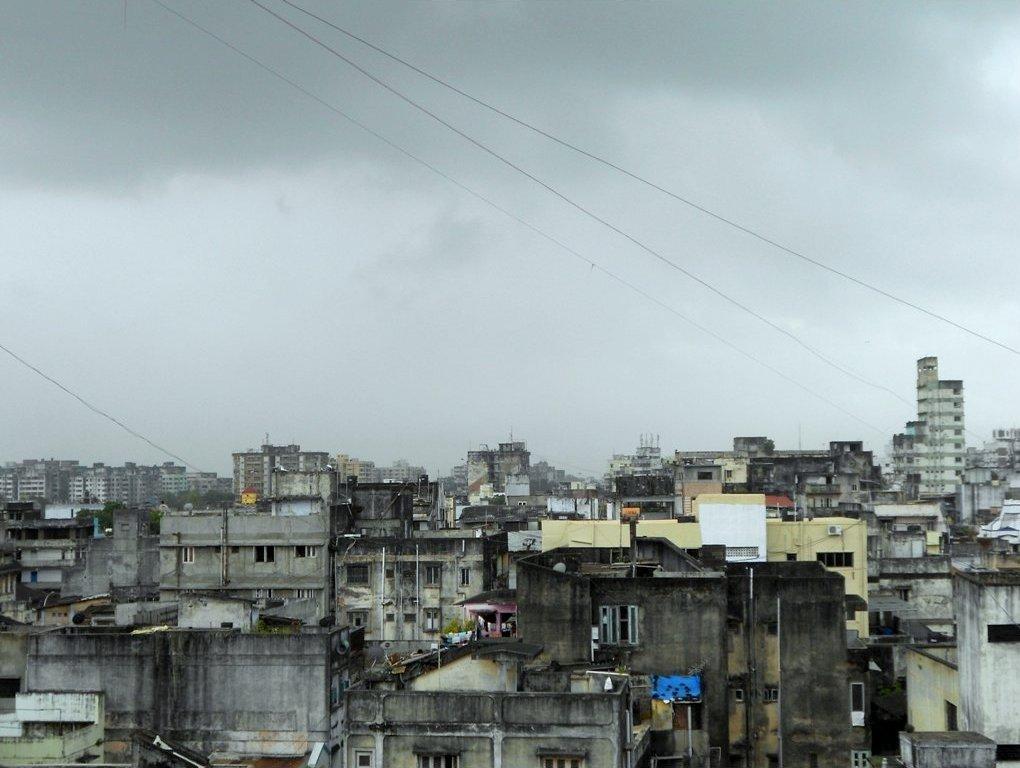
Surat has transformed remarkably over the past decade — from a city known primarily for textiles and diamonds to one of India's fastest-urbanising real estate destinations. For property owners looking to sell in 2026, this growth creates opportunity, but navigating the sale process without losing money to commissions or getting stuck with unserious buyers requires a clear strategy. This guide gives you exactly that.
What Makes Surat's Property Market Distinctive for Sellers
Surat's real estate market has several characteristics that sellers should understand before listing. The city's buyer pool is unusually diverse: local businessmen and textile traders who buy as investment, professionals relocating for work in the diamond and chemical industries, and a significant NRI community — especially in the USA and UK — whose families hold property here. This diversity means demand is rarely zero for any well-located property, but it also means buyers have widely varying expectations and timelines.
Active micro-markets in 2026 include Vesu, Adajan, Althan, Pal, Bhatar, and the developing outskirts near Kosad. Vesu and Adajan command a premium owing to social infrastructure and connectivity. If your property is in these areas, you are in a strong position — but even strong locations cannot compensate for overpricing. Buyers in Surat are sophisticated and compare registered values on the Gujarat government's Garvi portal before making offers.
For a broader view of how the process works, visit selling property in Surat to see what a managed, broker-free sale looks like in practice.
Getting Your Documentation in Order
In Gujarat, property registration happens through the online Garvi portal, and buyers (particularly those taking home loans) require a clean, complete document chain. Before you market your property, confirm you have the following:
- Title documents: Original sale deed, previous chain deeds going back ideally 30 years, and if applicable, a gift deed or partition document if the property came through inheritance.
- 7/12 extract or property card: For agricultural land converted to non-agricultural use, the NA order and 7/12 extract are essential. For residential flats, the property card from the urban local body suffices.
- Society documents: If the flat is in a cooperative housing society, the share certificate, society NOC for transfer, and a no-dues certificate are standard buyer requirements.
- Approved plan and OC: Occupancy certificate (OC) from the relevant authority is increasingly mandatory for buyers taking bank financing. Many Surat builders historically avoided OCs — if yours is missing, address this before listing.
- Tax receipts: Surat Municipal Corporation (SMC) property tax must be paid up to date. Outstanding tax becomes a liability the buyer will deduct from the price.
- Encumbrance certificate: Confirms no outstanding mortgage or charge on the property.
Pricing Strategy for Surat in 2026
Surat's market has seen meaningful appreciation in prime localities over the past three years, which sometimes leads sellers to over-anchor on peak estimates they read in news articles. The practical test of price is simple: does it generate enquiries from buyers who are financially ready to proceed?
To set a realistic asking price, look at transaction data on Garvi for your specific building or street — not just the broader area. Two buildings in Adajan on the same road can have registered transaction values that differ by 10-15% based on floor, age, and amenities. Independent rowhouses and bungalows in Vesu require a different approach: land value per square yard is a better benchmark than comparing built-up area with flat transactions.
A common mistake is factoring in renovation cost at full value. Buyers typically discount recent renovations — they will pay a small premium for a well-maintained property but rarely reimburse the full renovation spend. Price for the market, not for your costs.
The Real Cost of Selling Through Brokers in Surat
Broker brokerage in Surat typically runs between 1% and 2% of the transaction value, split between buyer-side and seller-side agents or charged entirely to the seller depending on the arrangement. On a ₹60 lakh flat in Althan, that is ₹60,000 to ₹1.2 lakh leaving your pocket — before you account for any preparation costs.
Beyond the fee, the traditional brokerage model has a structural problem: brokers are paid per transaction, so they have an incentive to push you toward any buyer who seems willing, rather than the best buyer for your property. This often means accepting a lower price in the interest of closing fast, or worse, dealing with buyers who back out after consuming months of your time because the broker never properly qualified them.
A pay-after-sale model eliminates this misalignment entirely. When a platform only earns if your property sells — and sells at a price you agree to — its incentives line up with yours.
Capital Gains and Tax Planning for Surat Sellers
Selling property almost always triggers a tax event. The key points Surat sellers must understand:
- Holding period matters: Property held for more than 24 months is treated as a long-term capital asset. Gains are taxed as LTCG. Short-term gains (property held 24 months or less) are added to your income and taxed at your slab rate.
- Indexation and LTCG rates: The rules on indexation for real estate LTCG have been revised in recent budgets. The applicable rate and whether you can use the cost inflation index to reduce your taxable gain now depends on the purchase date and your chosen computation method. This is a point where a Chartered Accountant's advice is not optional — get it before you finalise the sale price.
- TDS at source: For transactions of ₹50 lakh or more, the buyer deducts TDS at 1% under Section 194-IA and deposits it via Form 26QB. As the seller, ensure you receive Form 16B from the buyer after this is done — you will need it when filing your ITR.
- NRI considerations: If you are an NRI selling property in Surat, TDS rates are substantially higher — typically 12.5% to 20% on the long-term gain plus surcharge and cess. Applying for a lower-deduction certificate (Form 13) well in advance of the transaction can help significantly with cash flow.
- Reinvestment exemptions: LTCG can be sheltered under Section 54 (buy another residential property), Section 54F (for non-residential assets), or Section 54EC (invest in specified bonds within six months). Each has conditions around timelines and amounts — confirm eligibility with a tax professional.
Listing and Selling on BookPropertyVisit: How It Works for Surat Owners
BookPropertyVisit's model is straightforward: you list your property for free with complete details and photographs, and the platform handles buyer sourcing, screening, and visit coordination. Buyers who visit your property are verified and financially ready — not casual browsers or agents collecting listings.
Site visits are accompanied, meaning you do not have to be present every time, and you are not managing strangers through your property alone. The platform arranges and coordinates the visit logistics. You receive updates and can communicate with serious buyers through the platform without exposing your phone number to the entire enquiry chain.
Crucially, you pay nothing until your property sells. There is no listing fee, no monthly charge, and no commission due until the sale agreement is signed and you receive your payment. For Surat owners who have previously lost money to brokers on deals that fell through, this is a significant structural difference. Read more about how selling works on BookPropertyVisit before you list.
Is it legally valid to sell property in Surat without a registered broker?
Yes, entirely. Indian law does not require the involvement of a registered broker to complete a property transaction. The sale is effected through a sale deed executed on stamp paper of the applicable value and registered at the Sub-Registrar's office. Both parties may be represented by their own lawyers, and no broker registration or certification is required for the deal to be legally valid. Buyers and sellers routinely transact directly, and platforms that facilitate this are legally recognised intermediaries.
What stamp duty applies when selling property in Surat?
Gujarat currently levies stamp duty at 4.9% of the higher of the sale consideration or circle rate (government-prescribed ready reckoner value). Registration charges are 1% of value, up to a cap. These rates are subject to revision — verify the current rates at the Garvi portal or with the district registrar before preparing the sale deed. Concessions may apply for properties registered in the name of women buyers, which can indirectly affect negotiation.
How do I handle a property sale if I am an NRI based abroad?
NRI sellers can execute the sale remotely by granting a Power of Attorney (PoA) to a trusted person in India, who then signs documents on the seller's behalf. The PoA must be notarised and apostilled in the country where the NRI resides, and then adjudicated in India. Additionally, proceeds from the sale of an NRI's property can be repatriated to a foreign account subject to FEMA limits and RBI guidelines — consult a CA and a FEMA-compliant bank before the transaction to structure repatriation correctly.
Can I list multiple properties or a housing project on BookPropertyVisit?
Yes. Builders and developers with multiple units in a project — or individual owners with more than one property — can list all of them. The pay-after-sale model applies to each unit. Developers find this particularly useful for moving slow-moving inventory without committing to large channel-partner payouts upfront. Reach out at info@mexilet.com or call +91 7025892205 to discuss a bulk listing arrangement.
If you own property in Surat and want to sell without paying a broker upfront and without enduring months of unproductive enquiries, BookPropertyVisit is built for exactly this situation. List your property for free today, and only pay after your property sells. Genuine buyers, accompanied site visits, zero upfront cost — that is the deal every Surat seller deserves.
Thinking of selling your property?
Free listing · 0% brokerage · pay only when it sells