
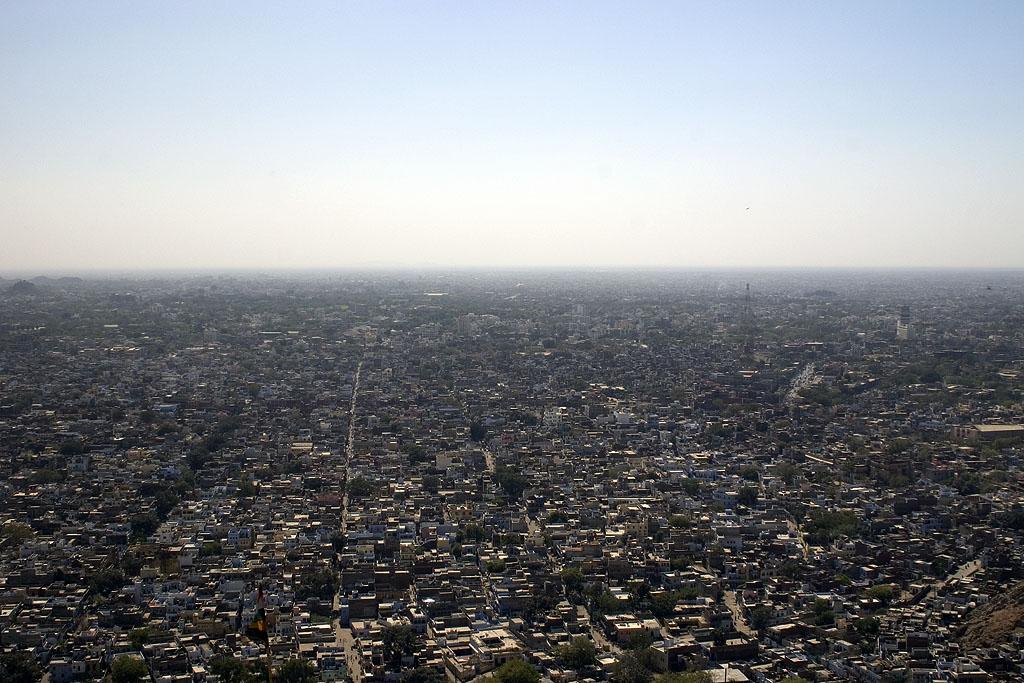
Jaipur's real estate market in 2026 sits at an interesting intersection: a heritage city with surging infrastructure investment, metro expansion, and growing appeal among both Rajasthan-based buyers and investors from Delhi-NCR. If you are a property owner planning to sell, you have a market working broadly in your favour — but the steps you take in preparation, pricing, and buyer selection will determine whether you close quickly and profitably, or spend months in unproductive negotiation. This step-by-step guide covers the full journey.
Reading Jaipur's 2026 Property Market Before You List
Jaipur's residential property market has seen sustained demand in several distinct corridors. The western zone — Vaishali Nagar, Mansarovar Extension, Pratap Nagar, and Tonk Road — attracts mid-to-upper-segment buyers including government employees, professionals, and families upgrading from older central city properties. The eastern and northern corridors near Jagatpura, Sitapura, and Agra Road have gained traction with buyers priced out of western Jaipur. Premium villas and plotted development continue to move in areas like Jagatpura Extension and areas along Ajmer Road near Mahindra SEZ.
A relevant factor for sellers is the significant volume of plotted development that Jaipur has historically produced. This creates a large supply of plots alongside flats and independent houses. If you own a plot, your buyer is typically either a builder or an end-user planning self-construction — both have specific documentation requirements you must prepare for. If you own a flat, the buyer pool is more direct but also more loan-dependent, which means documentation completeness is non-negotiable.
Start exploring your options at selling property in Jaipur to understand the managed-sale model before you decide how to proceed.
Step 1: Assemble Your Documents Before Marketing Begins
In Rajasthan, property transactions go through the Registration and Stamps Department, and both buyers and their banks scrutinise documentation carefully before committing. Missing or inconsistent documents are the most common reason deals in Jaipur fall through at the last stage — a costly outcome for sellers who have already invested time in negotiation.
Documents to prepare:
- Sale deed and chain documents: The original registered sale deed by which you acquired the property, plus all preceding deeds in the chain going back a minimum of thirty years. If the property came through inheritance, a will, succession certificate, or mutation entry serves as the link in the chain.
- Mutation certificate (Jamabandi): In Rajasthan, mutation of the property in revenue records in the seller's name is essential proof of ownership. Buyers' lawyers always verify current Jamabandi records — ensure these reflect your name and are free of encumbrances.
- Building plan sanction and completion certificate: Obtained from the Jaipur Development Authority (JDA) or Jaipur Municipal Corporation (JMC) as applicable. Many older properties in Jaipur lack a completion certificate — flag this upfront rather than letting a buyer discover it during due diligence.
- Encumbrance certificate: From the sub-registrar's office, confirming no registered charges or mortgages exist on the property.
- Property tax receipt: Latest paid receipt from JMC or the relevant urban local body.
- NOC from housing society or RWA: If your property is in a gated community with a Residents' Welfare Association, their clearance letter is required for transfer.
- PAN card: Mandatory for registration of any transaction above a threshold, and for TDS compliance.
Step 2: Set a Price Based on Evidence, Not Optimism
Jaipur has a wide range of property values across its localities, and sellers sometimes make the mistake of applying one neighbourhood's premium to another. A flat in Vaishali Nagar and one in Murlipura are not comparable in market terms, even if the built-up area is identical.
Use the Rajasthan government's stamp duty rate schedule and, where possible, registered transaction data to understand what comparable properties have actually sold for — not what they are currently listed at. Listed prices are aspirational; registered values are real. If you do not have access to transaction data, engage a local property valuer for an independent assessment — this costs a few thousand rupees and is well worth it before you commit to an asking price.
Factor in: floor in an apartment (ground floor often commands a premium or discount depending on the locality), parking availability (covered versus open), age of construction, and the society's maintenance quality. For independent houses, plot size and construction quality per square foot are the primary drivers.
Step 3: Reach Buyers Without Wasting Time on Unqualified Enquiries
A common frustration among Jaipur property sellers is the volume of enquiries that come to nothing. Brokers in Jaipur, like elsewhere, often operate by casting a wide net — broadcasting your property details across a network of sub-brokers, many of whom add your number to mass lists. The resulting enquiries include many from people who are years away from buying, or who are collecting information for a competing broker, or who are genuine buyers at a price point well below yours.
The way to avoid this is to work with a platform that pre-qualifies buyers before bringing them to you. BookPropertyVisit screens buyers for genuine intent and financial readiness — the people who come for a site visit are buyers, not browsers. You list your property for free, and the platform handles the outreach, qualification, and visit coordination. You engage only with buyers who have passed a screening process.
Accompanied site visits mean buyers get the information they need from someone who knows the property and can answer questions that move them toward a decision — rather than a self-directed walkthrough that often ends inconclusively.
Step 4: Understand the Tax Implications Before You Accept an Offer
Accepting an offer before calculating your net post-tax proceeds is a mistake that catches many sellers off guard. Here is what Jaipur sellers need to know:
- Capital gains classification: If you have held the property for more than 24 months, any gain is a long-term capital gain (LTCG). If held for 24 months or less, gains are short-term and taxed at your income slab rate, which could be significantly higher than the LTCG rate depending on your income level.
- LTCG rate and indexation: The Finance Acts in recent years have modified LTCG rates on real estate and the availability of indexation benefit. The rate and method applicable to your specific transaction depends on the date of purchase and current law — this requires a CA's input before you finalise a price.
- TDS for transactions above ₹50 lakh: The buyer is legally required to deduct 1% TDS from the payment under Section 194-IA, deposit it via Form 26QB, and provide you with Form 16B. If the buyer skips this, both buyer and seller face potential penalties — ensure this step is not overlooked.
- NRI-specific TDS: If you are a Non-Resident Indian, the buyer must deduct TDS at LTCG or STCG rates applicable to NRIs, which are considerably higher than 1% — often 12.5% to 20% of the gain plus surcharge and cess. Applying for a Form 13 lower-deduction certificate from the Income Tax department before the transaction is strongly advisable for NRI sellers.
- Saving on tax through reinvestment: Section 54 allows LTCG exemption if you reinvest in another residential property within the specified timeframe. Section 54EC allows exemption through capital gains bonds within six months. Both have caps and conditions — plan this with your CA before spending the proceeds.
Step 5: Navigate the Registration Process in Rajasthan
Once you have accepted an offer and a sale agreement is in place, the formal closing in Rajasthan involves:
- Execution of the sale deed, typically drafted by a lawyer or property document writer.
- Payment of stamp duty — currently levied in Rajasthan on a slab basis tied to property value; the exact rate varies and is best confirmed with the Registration and Stamps Department before deed preparation.
- Registration at the Sub-Registrar's office — both parties (or authorised PoA holders) must appear, along with two witnesses. Biometric identification is now required at most Rajasthan sub-registrar offices.
- Delivery of possession and original documents upon receipt of full consideration.
For a smoother process, ensure all parties' PAN details are correct on the deed, stamp duty is calculated on the higher of sale value or circle rate, and Form 26QB is filed by the buyer if TDS is applicable.
Do I need to register an agreement to sell before the sale deed in Jaipur?
An agreement to sell (also called a sale agreement or MOU) is not legally mandatory before the final sale deed, but it is strongly advisable in practice. It confirms the price, deposit amount, payment timeline, and conditions before both parties commit to the full registration process. It protects the seller if the buyer defaults and the buyer if the seller tries to back out or sell to someone else. A registered agreement to sell provides stronger legal protection than a notarised one, though registration involves additional stamp duty in Rajasthan.
What is the stamp duty rate for property sale in Jaipur?
Rajasthan's stamp duty is levied on a slab-based system depending on the property value, with different rates for properties in urban versus rural areas and for male versus female buyers. The rates have been revised multiple times in recent years — confirm the exact rate applicable to your transaction with the Rajasthan Registration and Stamps Department or your property lawyer before the deed is drafted, as even a small miscalculation creates a shortfall that must be rectified at the time of registration.
How do I handle a Jaipur property sale if the property is jointly owned?
All co-owners must consent to and execute the sale deed. If all co-owners are present and in agreement, this is straightforward. If a co-owner cannot be present, they must execute a Power of Attorney in favour of one of the parties to sign on their behalf. If there is a dispute between co-owners, the sale cannot proceed without either resolution of the dispute or a court order authorising the sale. It is advisable to resolve co-ownership questions before marketing the property, as buyers become reluctant when they learn of a contested ownership situation mid-process.
Can I sell a JDA-allotted plot on BookPropertyVisit?
Yes. JDA-allotted plots are among the most sought-after properties in Jaipur due to clear title and government provenance. Sellers of JDA plots should ensure the allotment letter, possession letter, lease deed (if applicable), and any subsequent registered sale deed are all in order, and that the plot is mutation-listed in the seller's name in JDA records. Contact info@mexilet.com or +91 7025892205 with your property details and the team can guide you through listing.
Selling property in Jaipur in 2026 is an opportunity worth approaching with preparation rather than haste. The right documentation, a realistic price, and access to pre-qualified buyers make the difference between a smooth sale and a drawn-out ordeal. List your property for free on BookPropertyVisit and discover how how selling works on BookPropertyVisit can connect you with serious buyers while keeping every rupee of brokerage in your pocket until the sale is complete.
Thinking of selling your property?
Free listing · 0% brokerage · pay only when it sells