
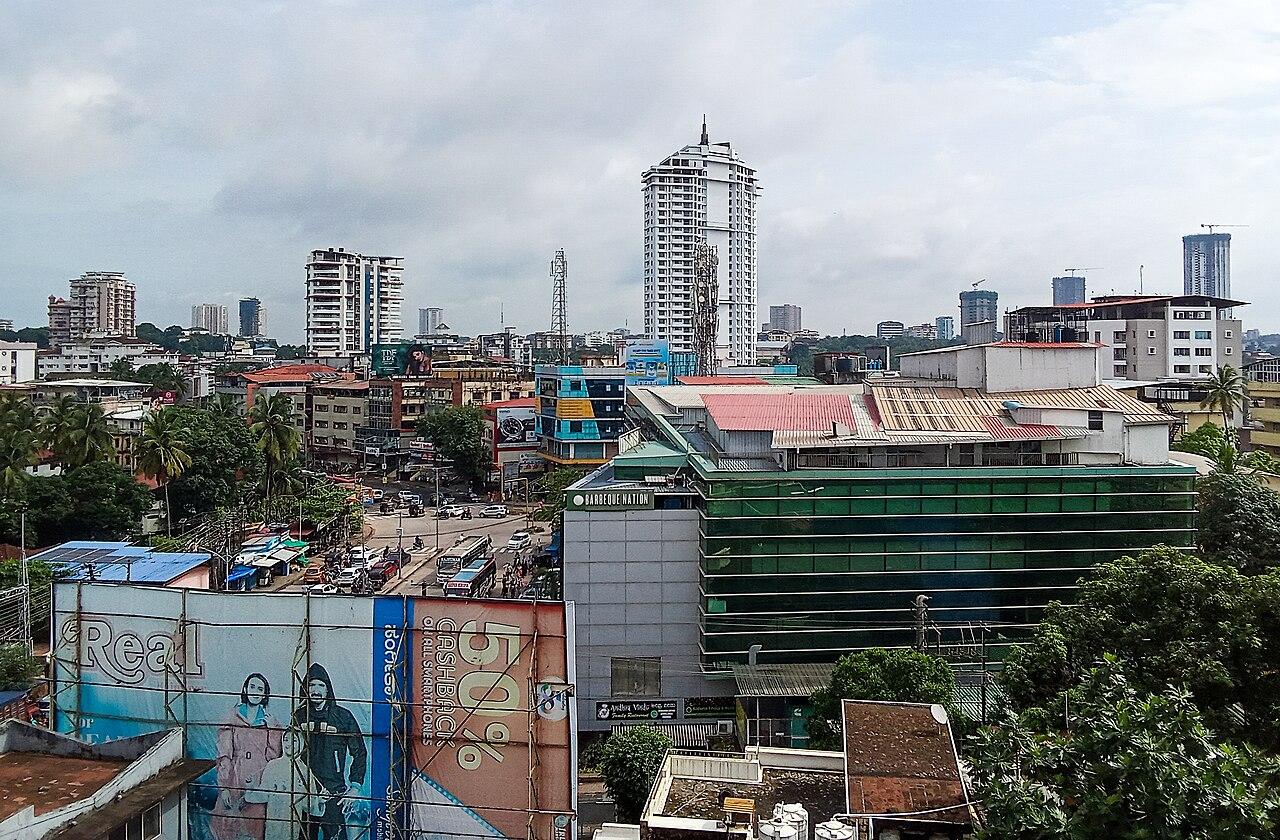
Mangalore — or Mangaluru as it is now officially known — occupies a unique place in Karnataka's real estate landscape. It is a port city with a strong NRI diaspora in the Gulf, a thriving educational and healthcare ecosystem, and a steady appetite for quality residential property. For owners planning to sell in 2026, understanding this city's specific buyer dynamics and following a structured process will make the difference between a sale that drags on and one that closes cleanly.
Who Is Buying Property in Mangalore Right Now?
Mangalore's property demand is shaped by a buyer profile unlike most Indian cities. A significant share of buyers are Mangaloreans or Tulu-speaking families based in the Gulf — particularly Oman, UAE, and Kuwait — who want to invest in their hometown or plan for eventual return. This NRI demand keeps prices for well-located properties relatively firm, especially in areas like Bejai, Kadri, Kankanady, Balmatta, Attavar, and Falnir.
Alongside NRI buyers, there is consistent demand from local professionals, healthcare workers, and employees of the new IT park developments. The city's medical institutions attract doctors and support staff who are active buyers in the ₹50 lakh to ₹1.5 crore segment for apartments and independent houses. The Mangalore Special Economic Zone (MSEZ) and port expansion have also brought in a working population that rents initially but eventually buys.
Understanding your buyer type helps you present your property accordingly: NRI buyers prioritise clear title, structural soundness, and proximity to family; local professionals prioritise connectivity, school catchment areas, and amenities. For a broader overview of the selling process in the city, see the dedicated page on selling property in Mangalore.
Step 1 — Organise Your Title and Legal Documents
Mangalore's property records fall under multiple jurisdictions depending on the property's history — Mangaluru City Corporation (MCC), the Sub-Registrar (Karnataka government), and older records may reference pre-1974 registers. Properties in converted agricultural land (DC-converted land) have an additional layer of documents: the DC conversion order, betterment charge receipts, and sometimes survey settlement records.
Compile the following before listing:
- Complete title chain: Registered sale deeds tracing ownership back ideally 30 years, or the original grant/allotment for KHB, KIADB, or municipal authority properties.
- Encumbrance certificate: From the Sub-Registrar's office or Kaveri Online Services, for at least 15 years. This is non-negotiable for any home loan application.
- Khata certificate and extract: From MCC or the respective gram panchayat for periphery properties. Confirm A-Khata status if the buyer will be seeking a loan.
- DC conversion order: For properties on converted agricultural land — this document proves the land can legally be used for residential purposes.
- Approved building plan and completion/occupancy certificate: From MCC's planning authority for apartments and independent houses.
- Property tax receipts: Current year, from MCC's online or offline channels.
- Betterment charges receipts: Where applicable, showing these have been paid to MCC.
If your property has an active home loan against it, obtain a foreclosure letter or NOC from the lending bank confirming the loan is fully repaid; this is essential before the buyer can register a new sale deed.
Step 2 — Price Your Property for the Mangalore Market
Mangalore's property values are deeply locality-specific. Premium residential neighbourhoods close to the city centre and educational institutions command higher rates; outer areas with newer developments offer more space at lower cost. The Karnataka government's guidance values for Mangaluru are available on Kaveri Online Services by locality and village survey number — check the current circle rate for your specific location as these are updated periodically.
Supplement the guidance value with these practical inputs:
- Registered transaction data on Kaveri for properties in your area over the last six months — this reflects what buyers have actually paid, not what sellers asked.
- Active listings on major portals to assess your competition; remember that the listing price includes a negotiation premium.
- NRI buyer sentiment: Gulf-based buyers often watch prices over one to two years before committing, so if your locality has strong NRI interest, pricing competitively can accelerate decisions.
Overpricing is a particularly costly mistake in Mangalore because the active buyer pool in any given week is smaller than in a metro city. Every week a property sits unsold reduces buyer interest further; the first four weeks of a listing are typically when you receive the most serious inquiries.
Step 3 — Reach Buyers Without a Middleman
Brokers in Mangalore charge sellers between 1-2% of the sale value, sometimes more for premium properties or where the broker has invested time in NRI outreach. On a ₹80 lakh property, that is ₹80,000 to ₹1.6 lakh paid from your proceeds — regardless of how much time or effort the broker actually put in, and regardless of whether the buyer had significant price negotiation leverage anyway.
Reaching buyers directly today is entirely feasible. Property portals have democratised listing access, and NRI buyers in particular research properties online before engaging anyone. The part that remains genuinely difficult is qualifying these inquiries — filtering out time-wasters, sub-brokers fishing for co-brokerage, and genuinely unaffordable inquiries from motivated buyers who are ready to act.
BookPropertyVisit handles this qualification layer: it screens buyers for intent and financial capacity, then arranges accompanied site visits at no cost to you. You list your property for free and pay only once the property is sold — no upfront fees, no commissions until you receive your money. Find out more about how selling works on BookPropertyVisit.
Step 4 — Negotiation, Agreement to Sale, and Registration
Once a buyer is identified and a price agreed, the standard sequence in Karnataka is: token advance → Agreement to Sale (notarised or registered) → home loan processing if applicable → balance payment → Sale Deed registration at the Sub-Registrar.
In Mangalore, a meaningful share of transactions involve NRI buyers who are not physically present in India at the time of agreement. If your buyer is an NRI, they can execute the Agreement to Sale and Sale Deed through a registered Power of Attorney (PoA) holder in India. Ensure the PoA is properly drafted and registered to avoid any challenge to the validity of the transaction later.
Agree explicitly in the Agreement to Sale on: exact consideration amount, payment schedule and mode, possession date, penalty clauses for delay by either party, and what fixtures, fittings, or movables are included in the sale. Clarity at this stage prevents disputes at registration or after possession.
Understanding Your Tax Position as a Seller
The income tax provisions on property sale apply uniformly across Karnataka, including Mangalore.
TDS under Section 194-IA: For resident sellers, when the sale value is ₹50 lakh or more, the buyer must deduct 1% TDS before payment and deposit it using Form 26QB. You receive Form 16B as your TDS credit certificate, which you use to claim the credit in your income tax return.
NRI seller considerations: If you are an NRI selling property in Mangalore, TDS applies at higher rates — broadly at the applicable capital gains rates plus surcharge and cess, which can be substantially more than 1%. If your actual income tax liability on the gain is lower than the TDS being deducted, you can apply to the Income Tax Officer for a lower-deduction certificate (Form 13) before the sale closes. This is a common and legitimate step for NRI sellers; involve a CA early in the process.
Long-term capital gains: Property held for more than 24 months qualifies for long-term treatment. Indexation rules have seen recent changes in Union Budgets — confirm the applicable computation method with a chartered accountant. If reinvesting the sale proceeds in another residential property or in specified capital-gains bonds (Section 54EC, up to ₹50 lakh), you can reduce or defer the tax liability. Section 54 (residential reinvestment) and 54EC (bonds) are the most commonly used exemptions; Section 54F applies when the property being sold is not a residential house.
Can I sell property in Mangalore if the buyer is an NRI in the Gulf?
Yes. NRI buyers can purchase residential property in India without restrictions (subject to FEMA regulations on remittance of funds). The payment typically comes through proper banking channels — NRE or NRO accounts, or direct remittance to your bank account. The key difference for you as the seller is that the buyer, as an NRI purchaser, may have additional KYC and FEMA compliance steps; your bank or CA can advise you on what to expect. The registration process itself follows the same Karnataka procedure — the NRI buyer or their PoA holder attends the Sub-Registrar's office along with you.
What is the process for selling a DC-converted plot in Mangalore?
DC conversion is the permission issued by the Deputy Commissioner of the district to use agricultural land for non-agricultural (residential or commercial) purposes. To sell a converted plot, you need the original DC conversion order, the mutation of the land records in your name (RTC/Pahani if applicable), the survey sketch and property card, Khata from the relevant local body, and an encumbrance certificate. Buyers' banks are familiar with DC-converted land in Karnataka and will typically accept it for home loan purposes provided the conversion is genuine and documents are complete.
How do I handle sale of an inherited property in Mangalore?
Inherited property sales require the title to first be established in the heirs' names. If the original owner died without a will, legal heirs need to obtain a legal heir certificate (from the Tahsildar) and get the property Khata and registered sale deed transferred through a gift deed or settlement deed among family members, or through a partition deed if there are multiple heirs. If there is a will, it may need to be probated depending on the community and circumstances. Once the title is clearly in your name, the sale proceeds like any standard transaction. Engage a property lawyer for the title transfer step — the cost is modest and the clarity it provides is invaluable.
Selling your property in Mangalore need not involve broker dependency, upfront fees, or unproductive site visits with unqualified buyers. List your property for free on BookPropertyVisit, let the platform bring you verified, serious buyers — including NRI buyers — and pay only after your property actually sells. Contact the team at info@mexilet.com or +91 7025892205 to discuss your property and get started.
Thinking of selling your property?
Free listing · 0% brokerage · pay only when it sells